

What Should Be Your Baby's First Foods?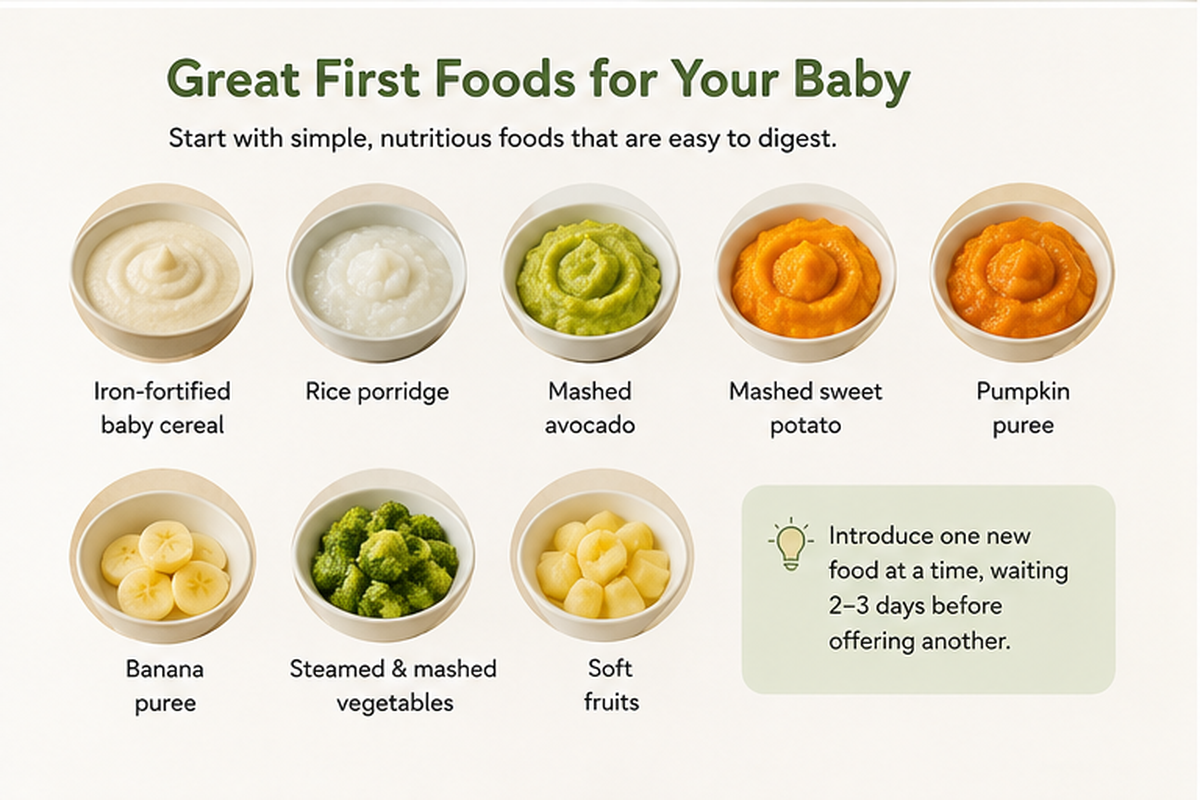
Starting solids is an exciting milestone—but many parents wonder, “What should I offer first?”
Most babies are ready to begin complementary foods at around 6 months old, when they can sit with support, hold their head steady and swallow food instead of pushing it out with their tongue.
Begin with a Smooth Texture
For the first few feeding attempts, you may steam or cook the food until soft, then blend it into a smooth purée. This gentle texture is easier for beginners to manage and may help your baby accept and adapt to solid foods more comfortably.
Suitable first foods include:
- Iron-fortified baby cereal
- Soft rice porridge
- Mashed avocado
- Sweet potato or pumpkin purée
- Mashed banana
- Steamed and blended vegetables
- Soft fruits such as pear or apple
There is no single “perfect” first food. Gradually introducing a variety of foods from different food groups helps your little one discover new flavours and textures while enjoying a more balanced and nutritious diet.
Gradually Introduce More Texture
Smooth purée is only the beginning. Once your baby becomes more comfortable with swallowing, gradually make the food thicker and move towards mashed or soft, slightly lumpy textures.
Introducing different textures helps your baby learn how to move food around the mouth, chew and swallow confidently. Always adjust the texture according to your baby’s development and supervise every meal.
Keep the First Meals Simple
Start with a small amount—around one or two teaspoons—and allow your baby to explore the new taste without pressure. Introduce common allergens one at a time and in small amounts so that any reaction is easier to notice.
There is no need to add salt, sugar or seasoning. Let your baby discover and enjoy the natural flavours of real food.
Remember, breast milk or infant formula should continue alongside complementary foods during this new feeding journey. Every baby progresses differently, so stay patient and make each mealtime a happy learning experience.
Don't Forget Healthy Fats
Healthy fats play an important role in your baby's growth
They help support:
- Brain development
- Eye development
- Nervous system function
- Absorption of fat-soluble vitamins (A, D, E, and K)
After preparing your baby's food, you can add a small amount of cold-pressed & unrefined oils, such as organic walnut oil or organic avocado oil, to provide additional healthy fats as part of a balanced diet.
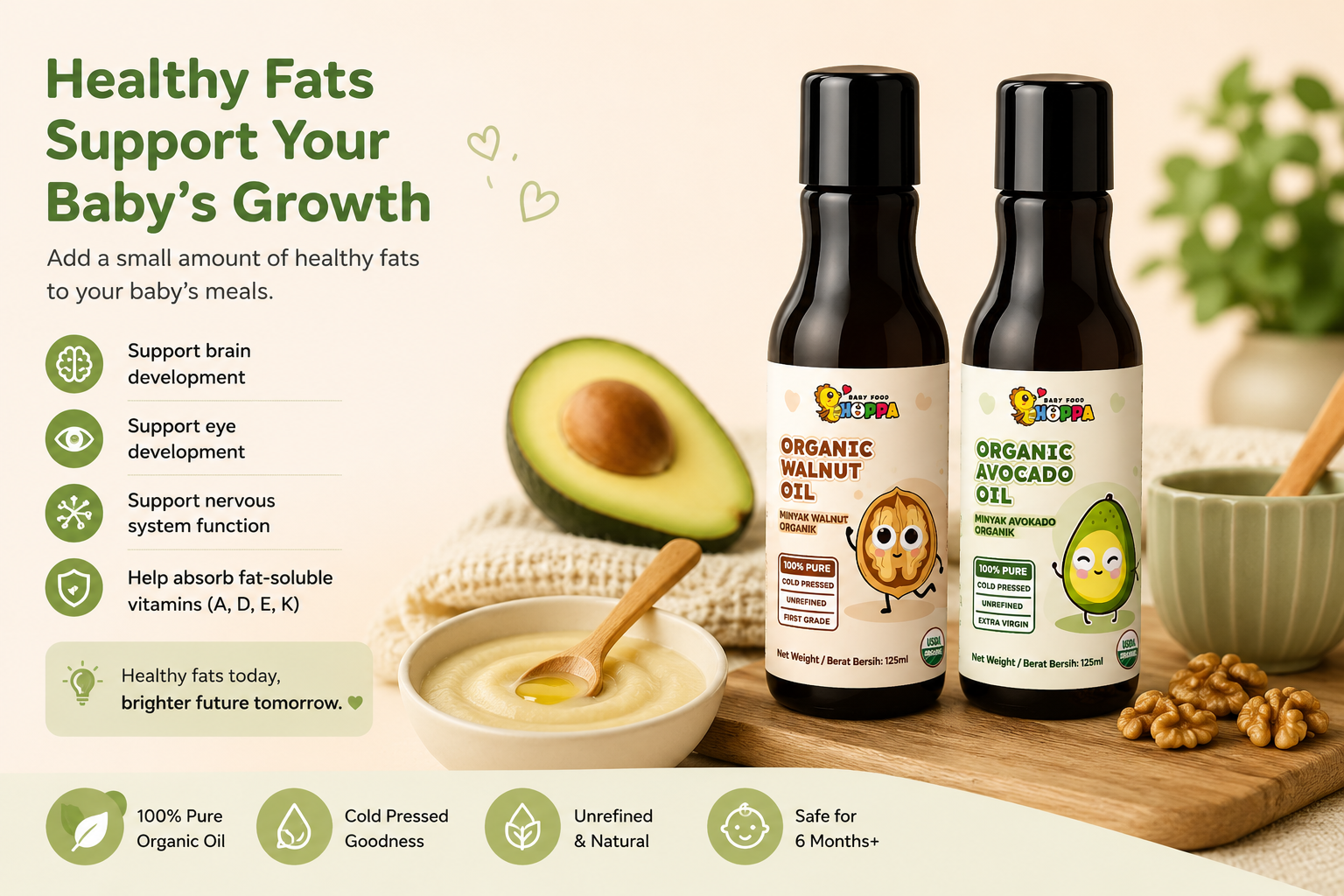
Recommended Organic Nutri Oil for your babies
Organic Walnut Oil:https://www.hoppababyfood.com/collections/organic-nutri-oil/products/organic-walnut-oil
Organic Avocado Oil:https://www.hoppababyfood.com/collections/organic-nutri-oil/products/organic-avocado-oil
Starting solids is an exciting milestone, but every baby is unique.
Watch your baby's developmental cues, introduce a variety of nutritious foods gradually, and make mealtimes relaxed and enjoyable.
With patience and consistency, you'll be helping your little one build healthy eating habits that can last a lifetime.