

7 Best First Foods for Babies
Wondering what to feed your baby first? Discover the best first foods for babies, when to start solids, and simple feeding tips to make your baby's weaning journey enjoyable and nutritious.
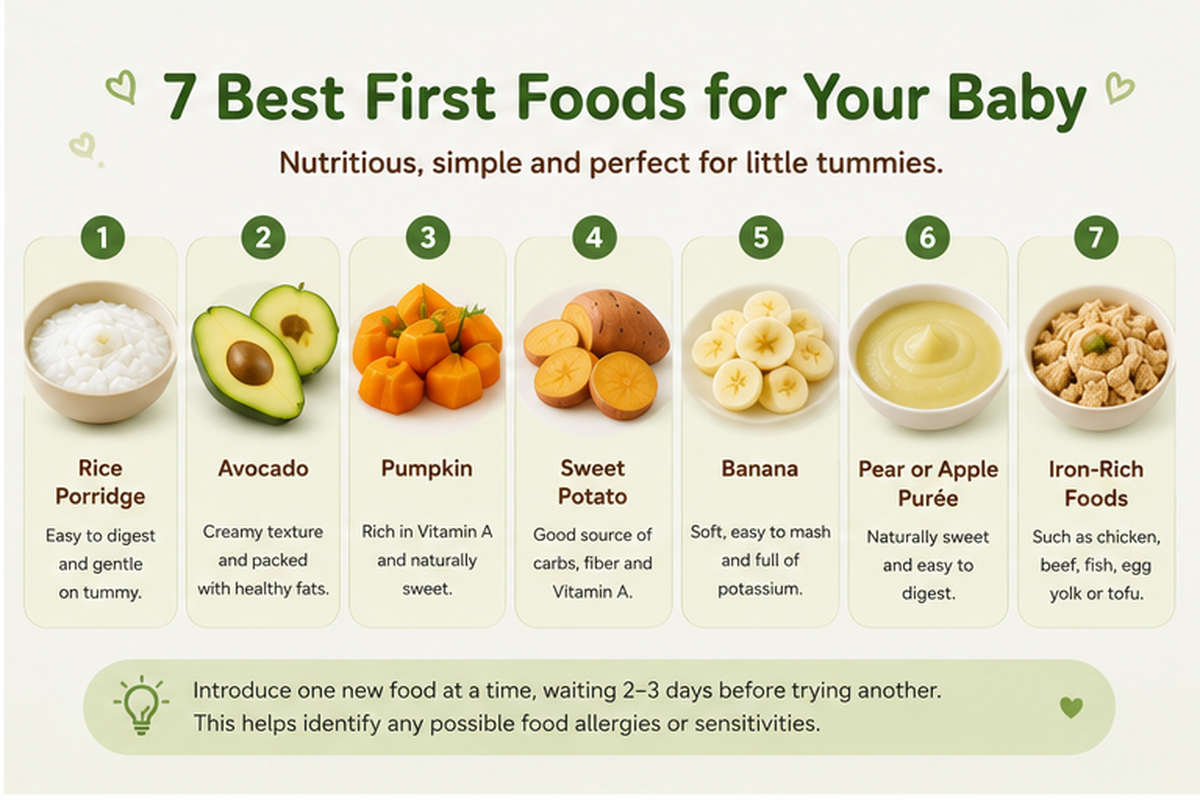
List of 7 Best First Foods for Babies
1. Rice Porridge
Rice porridge remains one of the most popular first foods across Asia.
It has a smooth texture, is easy to digest, and can be adjusted from thin to thicker consistency as your baby grows.
2. Avocado
Avocados are naturally creamy and packed with healthy fats, making them an excellent first food.
Simply mash with a fork and serve fresh.
3. Pumpkin
Pumpkin has a naturally sweet flavour that many babies enjoy.
It provides beta-carotene, which the body converts into Vitamin A to support healthy vision and immunity.
4. Sweet Potato
Sweet potatoes are rich in fibre, carbohydrates, and Vitamin A.
Their naturally sweet taste often makes them a favourite among babies.
5. Banana
Bananas are convenient, soft, and require almost no preparation.
Mash a ripe banana into a smooth consistency before serving.
6. Apple or Pear Purée
Steam apples or pears until soft before blending into a smooth purée.
These fruits provide natural sweetness without added sugar.
7. Iron-Rich Foods
From around 6 months, babies begin needing more iron as their natural iron stores gradually decrease.
Iron-rich foods include:
- Chicken
- Beef
- Fish
- Spinach
- Purple Carrot
- Tofu
Including these foods regularly supports healthy growth and brain development.
What Makes a Good First Food?
Your baby's first foods should be:
- Soft and smooth
- Easy to swallow
- Rich in nutrients
- Made from simple ingredients
- Free from added salt and sugar
The goal during the first few weeks isn't to eat a large amount—it's to help your baby learn new tastes, textures, and eating skills.
Why Iron Matters After 6 Months
During the first six months, babies usually receive enough iron from the stores they built before birth.
As they grow, those stores begin to decrease, making iron-rich complementary foods increasingly important.
Iron helps support:
- Healthy brain development
- Red blood cell production
- Energy levels
- Healthy growth
Offering a variety of iron-rich foods early helps your baby meet these growing nutritional needs.
An Easy Way to Add More Nutrition
Preparing homemade baby food every day can be time-consuming, especially for busy parents.
One simple way to enhance everyday meals is by adding Hoppa food powder to your baby's food.
A small sprinkle can be mixed into:
- Rice porridge
- Vegetable purée
- Pumpkin purée
- Potato mash
- Soup
- Noodles (for older babies)
This adds extra nutrition without changing your cooking routine.
Introduce One New Food at a Time
Whenever introducing a new ingredient:
- Offer only one new food at a time.
- Wait 2–3 days before introducing another.
- Watch for any signs of an allergic reaction, such as rash, swelling, vomiting, or diarrhoea.
This makes it easier to identify foods that may not suit your baby.
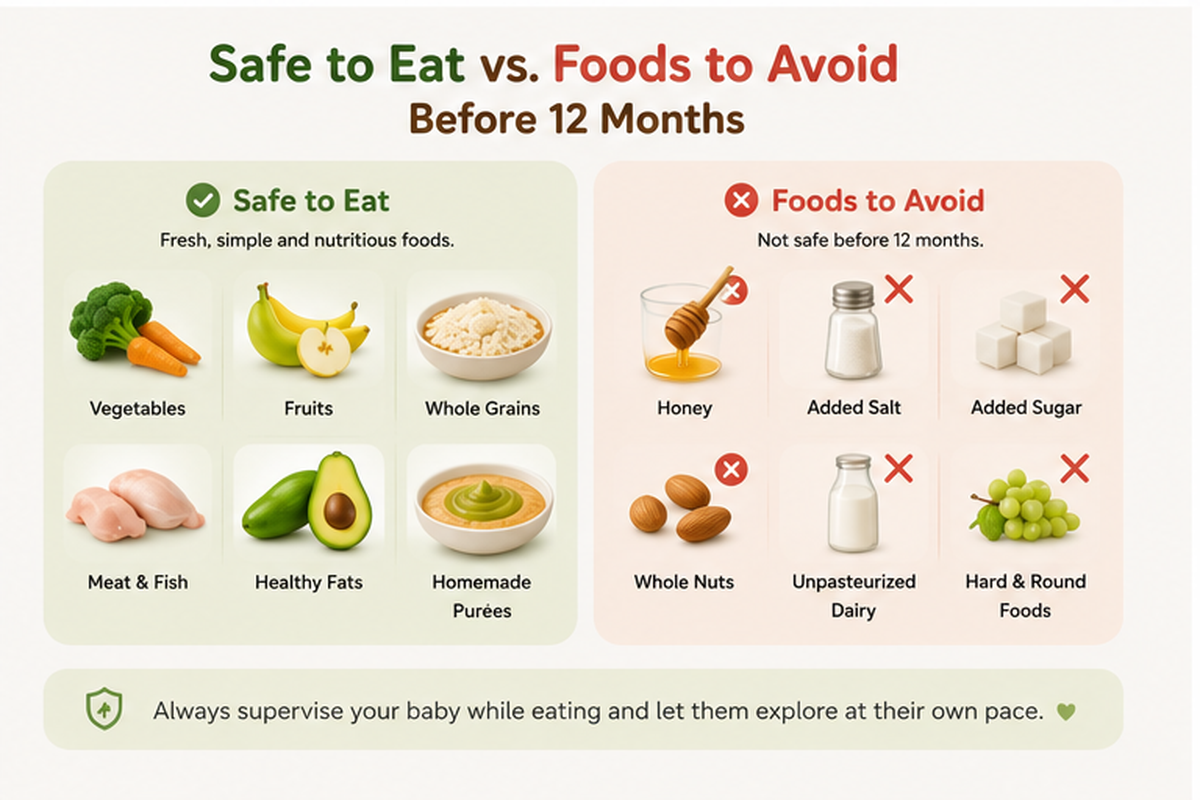
Foods to Avoid Before 12 Months
Some foods should be avoided during your baby's first year.
These include:
❌ Honey
❌ Added salt
❌ Added sugar
❌ Whole nuts (choking hazard)
❌ Unpasteurised dairy products
❌ Hard, round foods such as whole grapes or popcorn
Starting solids is an exciting new chapter for both you and your baby.
Focus on offering simple, nutritious foods, introduce one ingredient at a time, and enjoy exploring new flavours together.
There's no need to aim for perfection. Every meal is an opportunity for your baby to learn, grow, and build healthy eating habits that can last a lifetime.
Disclaimer: All posts are for learning and sharing ideas. Always talk to a medical expert for your baby's needs.